NAMA started in 2017 as a dropshipping yoga wear brand before evolving into the luxury athleisure label it is today. Founded by Shane Petersen out of Toronto, Canada, the brand has carved a niche redefining what luxury sportswear looks like: sophisticated silhouettes in premium four-way stretch fabrics, sold primarily through e-commerce with wholesale presence in boutique studios and gyms across the GTA.
The product team is lean. Shane leads product development end-to-end, from initial mood boards and sketches through fabric development, tech pack creation, and production management. A design assistant handles technical drawings, and an in-house pattern maker creates pattern files depending on the supplier. With two to three factories (including suppliers in China that Shane visits in person), the team runs approximately four collections per year.
NAMA's development process started on Google Sheets, and the limitations became painful fast. Adding imagery or sketches caused formatting issues. Individual files had to be pulled up separately, and nothing was in one accessible place. Sheets was intermingled with everything else in Google Drive, making it difficult to find the right tech pack quickly.
Shane tried building a solution in Notion, which worked marginally better for tracking sample iterations, but still wasn't purpose-built for product development. That search eventually led to Backbone, a PLM that served NAMA well for about a year, until the company was acquired and pricing shifted to enterprise-level minimums. For a small team, the cost no longer matched the value.
Google Sheets just isn't made for this. Adding any sort of imagery or sketches caused formatting issues. It was messy, just not a solution built for product development.

Shane Petersen
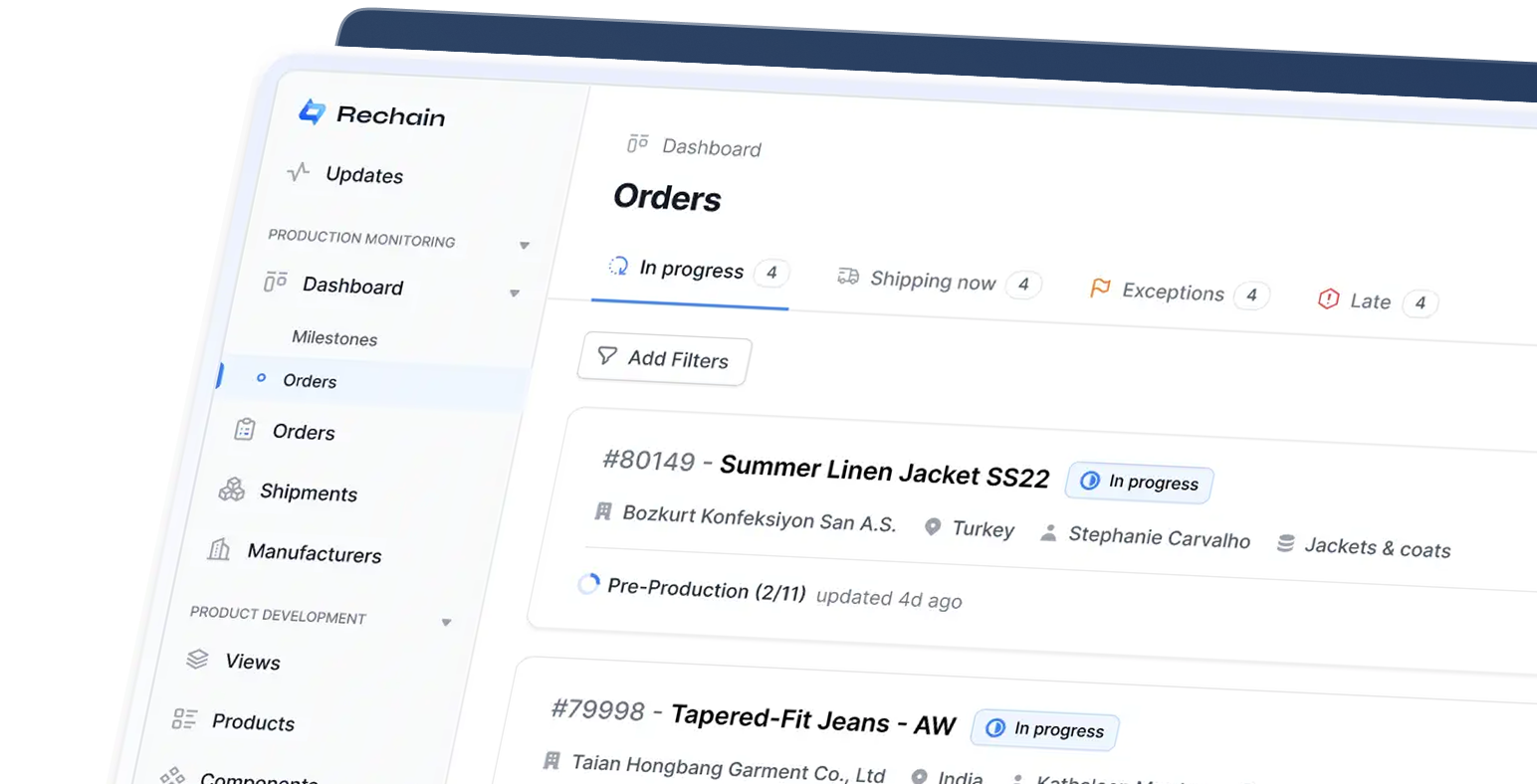
Shane found Rechain while searching for a more reasonably priced alternative to Backbone. The platform's clean interface and existing customer base signalled maturity, and the ability to transfer existing data quickly made the switch practical rather than painful.
The most immediate value was having all styles in a single, organised library. Tech packs, imagery, sketches, POMs, and construction details all live in one place, eliminating the need to hunt through scattered files. For a founder managing product development solo, that consolidation translates directly into faster decision-making across every collection.
What set Rechain apart wasn't just features; it was responsiveness. Shane's feedback on measurement ordering, annotation tools, and tech pack link sharing was heard and acted on. Features like grade rule application and block imports save time on every style. The platform's willingness to iterate based on actual user needs built confidence that gaps would be closed.
Pricing was also a decisive factor. With no minimum user requirements or locked-in contract durations, Rechain earns its place on cost alone, which is critical for DTC fashion brands managing tight margins in an era of rising software costs.
Having you be heavily involved and being able to be contacted and reply very quickly, that was huge. And just being able to take feedback and improve the platform was something where I had faith this was going to improve as we used it.
Shane Petersen
The shift from spreadsheets and Notion to a dedicated PLM has removed friction from NAMA's development workflow at every stage. Tech pack sharing with suppliers, previously a manual process of compiling attachments, artwork files, and pattern files, now saves approximately five minutes per style through shareable links. Measurement management with grade rules and reusable blocks further reduces repetitive work across collections.
As NAMA continues expanding its definition of luxury sportswear and growing its collection cadence, having a centralised, affordable development tool positions the brand to onboard new team members and suppliers without rebuilding processes from scratch.
Even as I'm saying it, if it was just me and I could afford it, I would still want it. It does make things easier and more organised. Using Sheets was just too much of a pain, even with one or two people working on it.
Shane Petersen
Boost your productivity. Start using Rechain PLM today
Get a personalized demo and see how Rechain PLM can help you manage your product development and production processes.