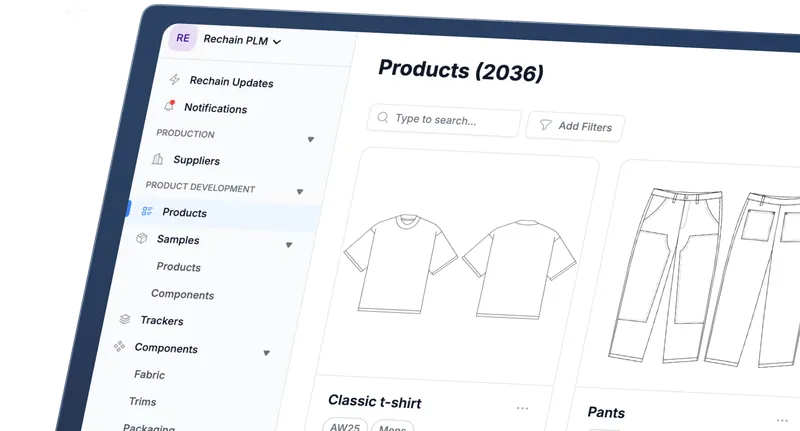
Fashion PLM with a NetSuite ERP connector
Once a style is finished, Rechain sends its product data, BOM and cost sheet to NetSuite and keeps purchase orders matched between production and finance. Brands on ApparelMagic get the same connection, and anything else connects through our open API. Here's how our ERP integrations work.
Kōbō's native ERP and accounting connectors are Odoo and Xero. For NetSuite it has no native connector and points you to its API to build the import.
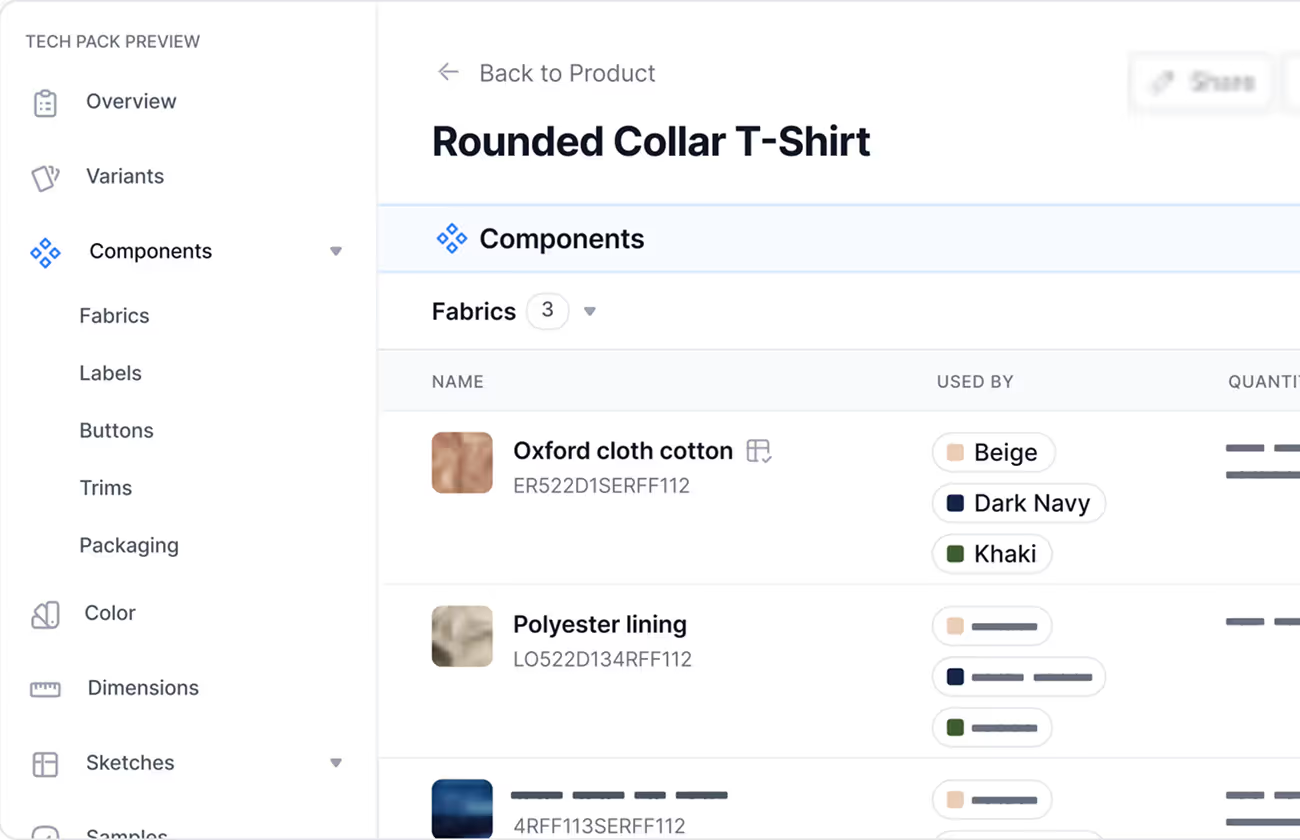
Apparel PLM alternatives to Kōbō: where purchase orders, stock and invoices live
On Kōbō, each person on your team gets one seat, and the seat decides which jobs they can do. Here's which seat or add-on covers each job:
| The job | Rechain | Kōbō |
|---|---|---|
| Product data, BOMs and tech packs | Business seat: $99 a user a month paid upfront, or $120 paid monthly, on a 12-month commitment | Studio Lite seat: $120 / $140. Grading and costing need Studio Pro: $180 / $210 |
| Purchase orders with your factories | Production Management add-on: $29 a user a month | Ops & Supply seat, which is Studio Pro plus purchasing, production and stock: $255 / $300 |
| Stock and inventory | Your ERP | Ops & Supply seat |
| Sales orders and invoices | Your ERP | Sell & Deliver seat, per sales user: $140 / $160 |
| Shopify | Shopify Synchronization add-on: $250 a month | Listed under Ops & Supply on Kōbō's pricing page |
If Kōbō will be your ERP, those seats are its price. If NetSuite or ApparelMagic already keeps your stock and sends your invoices, you'd be paying for that work twice. On Kōbō, purchase orders come with the step from Studio Pro to Ops & Supply, $75 more per person a month billed yearly. On Rechain they're an add-on at $29 a month for each person who uses it. Your suppliers log in free on both. No ERP yet? Here's whether PLM or ERP should come first.
Fashion PLM with a Shopify integration
Rechain pushes approved products to your Shopify store with titles, descriptions, images, pricing and every colorway and size as a variant. Mikuta, La Coqueta, Alice Walk and Pure Cotton Global sync hundreds of styles that way every season. Kōbō sends products to Shopify and brings orders and stock back into Kōbō, one store per workspace.
Other Kōbō alternatives for apparel brands
Start with one question: does the tool feed your ERP, or replace it? Our comparison of 13 fashion PLMs reviews the main ones one by one, and we've compared Rechain with Onbrand and Centric on their own pages.
- Fashion PLMs: Onbrand, Delogue, Backbone (now part of Bamboo Rose), BeProduct, Lifecycle, StyleChain and Portia. Techpacker, if you only need tech packs.
- ERPs with a PLM module, the closest to Kōbō's one workspace: Uphance, ApparelMagic, BlueCherry and Zedonk.
- Enterprise PLMs: Centric, PTC FlexPLM, WFX and Lectra Kubix Link.
Frequently asked questions
What is the best PLM software for fashion companies?
For a brand doing $10M to $200M a year, we'd pick Rechain, and more than 250 brands have, as of November 2026. Product data, tech packs, samples and your suppliers all live in one place.
How do you move from Kōbō to Rechain?
Export what you have from Kōbō: each tech pack as a PDF with its BOM and points of measure, plus its scheduled data exports. Send us the files and our team does the import, the way we imported the 300 tech packs Destira had made in Adobe Illustrator. Vitality came to us from another PLM and was up and running within two weeks.
Does Rechain have a free trial?
No. Kōbō offers 14 days free; every Rechain plan comes with a 60-day money-back guarantee instead.